








Key Takeaways
- Assess your overall financial health, including income, debts, credit score, and emergency savings, before buying a home.
- Set a realistic home-buying budget that keeps monthly housing costs within 28% of your pre-tax income while maintaining retirement contributions.
- Explore down payment assistance programs and low-down-payment loan options to avoid tapping into retirement accounts.
- Avoid early withdrawals from retirement funds to preserve long-term growth and compound interest.
- Maintain consistent retirement contributions throughout the home-buying process to protect your future financial security.
- Seek guidance from financial and real estate professionals to balance homeownership goals with long-term retirement planning.
Introduction
Achieving homeownership is a major life goal, but it is critical to pursue it without undermining your long-term financial future. For many, the challenge lies in saving enough for a down payment while maintaining robust retirement savings. If you are thinking about buying property in competitive markets, guidance from a local expert like Laguna Beach real estate agent Clara Blunk can be an invaluable resource in your search for the right financial fit. This guide provides a step-by-step strategy to help you buy a home while preserving your retirement savings.
To make a smart purchase, you need to carefully consider your present finances, expected lifestyle changes, and how to keep your nest egg growing. By combining diligent planning with the right resources, you can strike a balance between homeownership and retirement security.
While many buyers look for creative ways to fund their home purchase, it’s important to avoid short-term decisions that compromise your future security. Understanding which resources to leverage and which to protect will allow you to approach the process with confidence.
From budgeting wisely to tapping assistance programs, each step you take will help ensure you make choices that support both your homeownership and retirement goals. Taking a systematic approach will deliver better outcomes for your long-term financial health.
Assess Your Financial Health
Start your journey by taking stock of your current financial standing. Review all sources of income, outstanding debts, and assets. Calculate your debt-to-income ratio to understand how much you can safely borrow. Most lenders consider a ratio below 36% ideal for mortgage approval. Your credit score also plays a major role; a higher score could mean more favorable loan terms. Make sure you have built an emergency fund that covers at least three to six months of living expenses. This cushion protects you from unexpected setbacks and helps ensure you can continue saving for retirement even if unforeseen events occur.
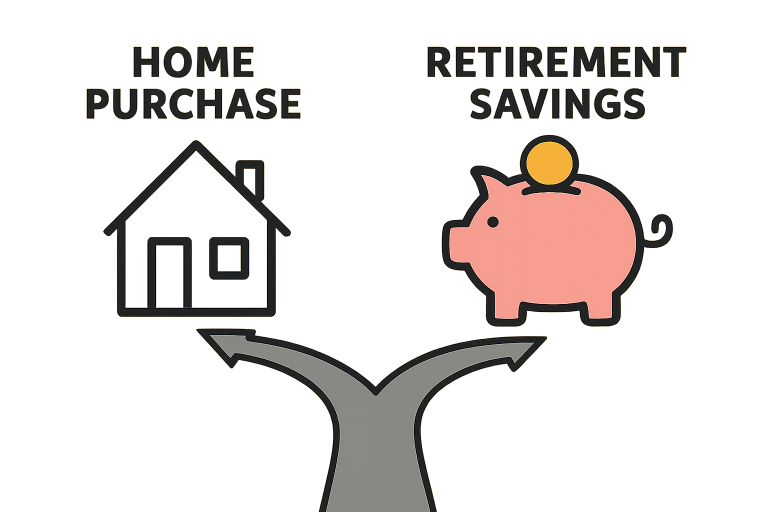
Set a Realistic Budget
Deciding how much house you can afford is crucial. Experts typically recommend that your monthly housing expenses should not exceed 28% of your pre-tax monthly income. This guideline allows you to comfortably handle mortgage payments and related expenses while consistently contributing to your retirement accounts. Factor in not just the mortgage, but also property taxes, homeowners’ insurance, maintenance, and any association fees when determining your total budget. By avoiding the temptation to overspend on a home, you’ll retain the flexibility needed to keep your other financial commitments, including your long-term retirement investments.
Explore Down Payment Assistance Programs
Many first-time homebuyers struggle to save for a down payment. Fortunately, several federal, state, and local programs offer assistance through grants, forgivable loans, or low-interest second mortgages. These programs can significantly reduce the amount you need to contribute out-of-pocket and help you avoid dipping into retirement savings. Eligibility often depends on factors such as income level, location, and whether you are a first-time buyer. By exploring these resources early in your process, you can create a pathway to homeownership that does not derail your retirement plans.
Avoid Tapping into Retirement Accounts
Tapping into retirement accounts like 401(k)s or IRAs to cover a down payment can seem like a quick fix, but it has significant drawbacks. Early withdrawals often incur taxes and penalties, and you’ll lose out on future compound growth. This means that the funds you withdraw today could be worth much more by the time you retire. According to finance professionals, homebuyers should prioritize other options before considering withdrawals from retirement accounts.
Consider Alternative Financing Options
Homebuyers today have access to several mortgage options that require lower down payments. For instance, FHA loans offer flexible minimums as low as 3.5% for qualified buyers, and VA or USDA loans offer unique benefits for eligible applicants. These programs are particularly helpful if saving a large down payment is a challenge. Some lenders also have special loan products designed to assist first-time buyers through relaxed requirements or down payment support. By researching these alternatives, you can access financing without liquidating retirement assets.
Maintain Retirement Contributions
Throughout the home-buying process, it is vital to keep your retirement savings plan on track. If you must adjust your budget, look for expenses you can temporarily reduce to keep investing in your future. Even brief interruptions in contributions can have long-term consequences on the size of your retirement nest egg. Automated contributions can help you maintain consistency, even during a costly transition. Remember, the earlier and more steadily you save, the more time your investments have to grow.
Seek Professional Financial Advice
Consulting a financial advisor can help you navigate tricky decisions like budgeting, funding a home purchase, and balancing other life goals. An advisor will consider your entire financial picture and help you achieve your objectives. They can explain the nuanced rules of both retirement and homeownership planning, making sure you make the most informed choices possible.
Final Thoughts
Buying a home while protecting your retirement savings requires thoughtful planning, disciplined budgeting, and the right advice. By assessing your current finances, setting a prudent limit on your housing expenses, taking advantage of assistance or alternative loans, and consistently contributing to your retirement accounts, you can achieve both dreams. With the proper resources and mindset, you will secure a new home while ensuring lasting financial security.