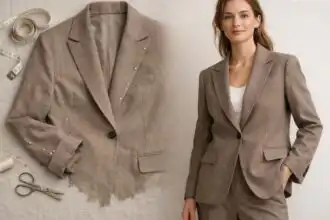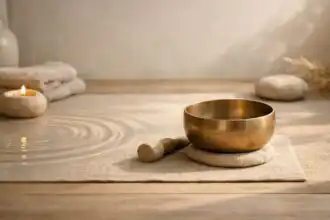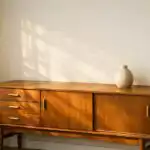
A limestone counter with a faint vein running through it. A slipcovered chair that’s clearly been sat in. Nothing matched on purpose, and somehow it all belongs together. That’s the room everyone’s chasing right now.
Call it what you want — cottage, warm minimalism, the antidote to a decade of grey — but the direction is unmistakable. Homes are moving away from the cool, controlled minimalism that defined the last ten years and toward something warmer, softer, and visibly lived in.
Farmhouse’s softer cousin
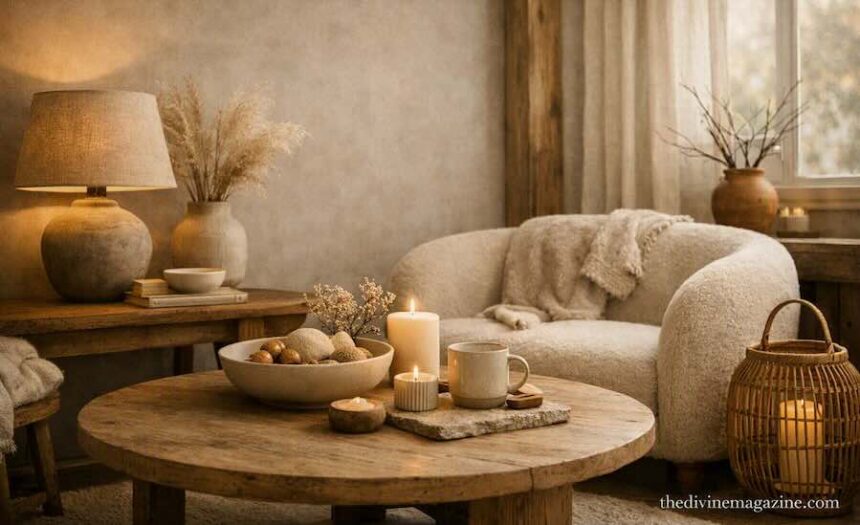
If modern farmhouse had a gentler, more soulful relative, it would be modern cottage. The style borrows the clean lines people still want but drops the rustic hardware and barn-door signaling that made farmhouse feel like a trend rather than a home. In practice, that means classic English and French cottage details — natural wood, stone, soft textiles — filtered through a less-is-more approach to styling (Jane at Home).
What sets it apart from the rustic farmhouse era is restraint. Lighter, airier, more refined — cottage in 2026 leans into quiet luxury and timeless materials while staying approachable, not staged for a photo.
The palette shifted from cool to warm
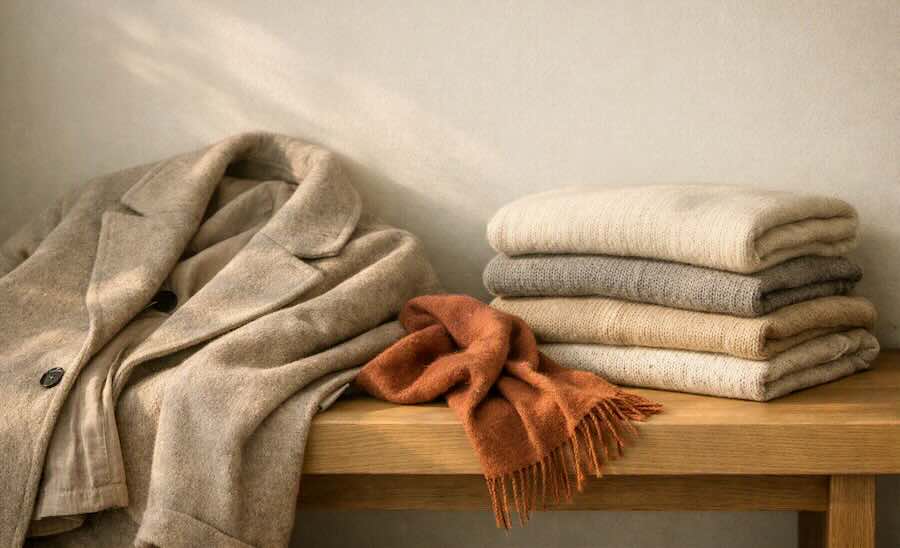
Icy greys are fading. In their place: Terracotta, creamy white, ochre, sand, caramel, warm taupe — the kind of palette that reads as earthy rather than staged (Yanko Design). Designers are pairing those warm neutrals with deeper, moodier accents — burgundy, dark teal, muted olive — layered rather than applied as a single flat color (Jane at Home).
In practice, that means mixing at least three warm neutrals in one room through textiles, finishes, and furniture rather than committing to one flat tone throughout.
Curves, over corners
Rounded forms are overtaking rigid geometry across the board — curved sofas, arched joinery, Sculptural coffee tables that read as much as art as furniture (Yanko Design). Designers describe 2026 as a year defined by atmosphere and layering, where curved joinery and bespoke shelving add interest without dominating a room (Homes & Gardens).
One statement piece is usually enough. A curved chair, a rounded coffee table, positioned somewhere the light can actually reach it.
Texture is doing the work color used to do
Matte plaster. Fluted cabinetry. Nubby linen and nothing that gleams. 2026 interiors are leaning into depth and dimension through materials rather than pattern (Jane at Home). A lime-wash feature wall. Fluted detail on a single vanity or sideboard. Bouclé and jute mixed in, not matched.
How to bring it in
- Start with the walls, not the furniture. A warm neutral — sand, taupe, creamy white — gives everything else somewhere to land.
- Add one curved piece. A chair or coffee table with a rounded silhouette is enough to shift the whole room’s feel.
- Mix textures, not colors. Linen, bouclé, raw wood, and stone in the same tonal family reads as intentional, not chaotic.
- Bring in one older piece. An antique dresser or vintage table paired with newer furniture does more than a full matching set ever will.
- Resist the flat neutral. Layer at least three warm tones — through rugs, throws, upholstery — instead of painting one shade and stopping.
Where this leaves you
The through-line across every version of this trend is the same: rooms that look better the longer you live in them, not the day they’re photographed. Cottage, warm minimalism, whatever the label — it’s a home built to be used, not staged. That’s the part worth keeping past the trend cycle.
FAQ
Is modern cottage different from farmhouse style?
Yes. Farmhouse leans rustic — barn doors, distressed wood, shiplap. Modern cottage keeps the warmth but drops the theming, favoring quieter, more refined materials like limestone, linen, and soft-toned wood.
Do I have to repaint to get the look?
No. A single accent wall in terracotta or olive, paired with warm-toned textiles, gets most of the effect without a full repaint.
What’s the easiest way to start if I rent?
Textiles first — a linen throw, a jute rug, bouclé cushions — then one curved furniture piece. Both are fully portable and don’t touch the walls.
Will this style feel dated in a couple of years?
Less likely than most trends — it’s built on natural materials and timeless proportions rather than a specific color or shape, which is exactly what’s replacing the more disposable furniture trends of the last decade.
2 views