
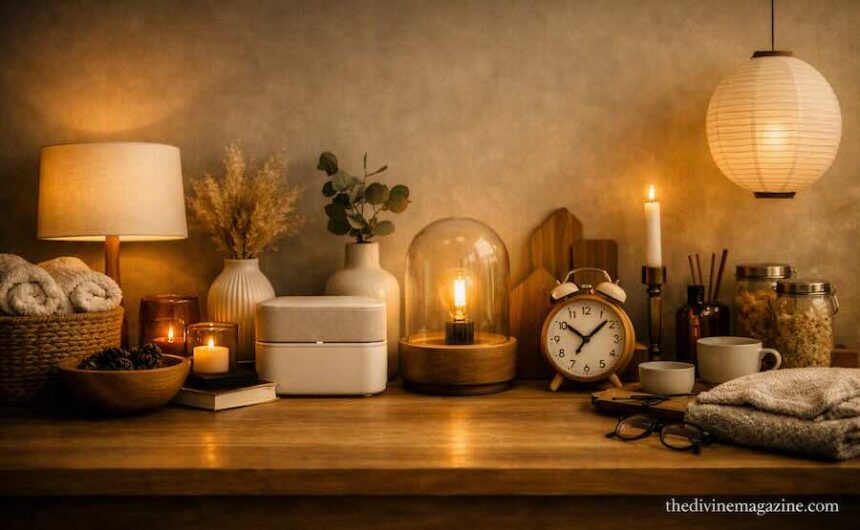
Scandinavian design has always treated light as more than a utility. In a region where winter can mean weeks of near-total darkness, light became the quiet architecture of daily life — something that shapes mood, rhythm, and comfort as much as any piece of furniture. Today, that centuries-old sensibility is merging with a new generation of smart lighting technology, and the result is a design movement that is as much about wellbeing as it is about aesthetics.
- Why Scandinavian Lighting Looks the Way It Does
- Where Smart Technology Is Taking It Next
- 1. Circadian-Responsive Lighting
- 2. Layered Light, Automated
- 3. Daylight-Aware Automation
- 4. Sustainability Built In
- Why This Matters for Wellness at Home
- Bringing It Into Your Own Home
- Conclusion
- Frequently Asked Questions
This post looks at where Scandinavian lighting is headed: the principles that have always defined it, the smart technologies now reshaping it, and what that means for how we light our homes in the years ahead.
Why Scandinavian Lighting Looks the Way It Does
Scandinavian lighting philosophy is inseparable from hygge, the Danish concept of cozy contentment. Long, dark winters — in places like Tromsø, Norway, the sun doesn’t rise at all between late November and mid-January — pushed Nordic households toward a very specific approach to artificial light: warm, layered, and human-scaled rather than bright and uniform.
- Warm color temperature. Nordic interiors favor soft, amber-toned light (roughly 2700K, sometimes warmer) over cool white, which reads as clinical rather than comforting.
- Layered sources. Rather than one dominant overhead fixture, a typical Scandinavian living room might use five to seven smaller light sources — floor lamps, table lamps, a dimmed pendant, candles — creating pools of warmth instead of even, shadowless light.
- Maximizing daylight. Sheer curtains, light wall colors, and large windows are used to pull in every available hour of natural daylight before artificial light takes over.
This isn’t just decorating preference. As one lighting-focused design studio puts it, hygge is “not a decorating style… it is a feeling — and the single most powerful tool for creating it is light” (Nordalight, The Hygge Lighting Guide). That emotional, human-centric starting point is exactly what makes Scandinavian design such fertile ground for smart lighting — a technology category that, until recently, was defined mostly by convenience rather than feeling.
Where Smart Technology Is Taking It Next
The next chapter of Scandinavian lighting is being written by tunable, connected systems that can do something candles and lamps never could: change automatically across the day to match the body’s own internal clock.
1. Circadian-Responsive Lighting
Circadian lighting design uses tunable-white (and increasingly RGBTW) fixtures to shift color temperature and intensity throughout the day — cooler and brighter in the morning to support alertness, warmer and dimmer in the evening to support natural melatonin production and sleep. Researchers at the California Lighting Technology Center have been studying exactly this relationship between light color, intensity, and biological wellbeing, and note that shifting from a cool daylight hue in the morning to a warm evening glow aligns lighting with the body’s own rhythms (Construction Specifier).
Global engineering firm Arup has spent over a decade researching how to translate that science into real buildings, and points out that a circadian lighting curve tuned for one city won’t necessarily suit another — latitude, season, and natural light availability all matter (Arup, Light and Wellness). For Scandinavian homes, where daylight swings dramatically between summer and winter, this kind of location-aware tuning is especially relevant — smart systems can compensate for months of missing daylight in a way static fixtures never could.
2. Layered Light, Automated
The traditional Scandinavian “layered light” approach — multiple small, warm sources rather than one bright overhead — translates naturally into smart home ecosystems. Instead of manually adjusting five lamps as the evening progresses, a scene-based smart system can dim a pendant, warm a floor lamp, and bring up a wall sconce automatically, preserving the hand-tuned, layered feel Nordic interiors are known for without the manual effort.
3. Daylight-Aware Automation
Automated window coverings paired with tunable fixtures can now mimic the gradual brightening of a sunrise, easing residents awake with rising light rather than an abrupt alarm, then gently dim in the evening. Design practices working with wellness-focused clients describe exactly this pattern: coverings opening gradually as tunable lighting mimics morning light to build alertness without glare (Sesshu Design). In a region defined by extreme seasonal daylight swings, this kind of automation does real work — not just adding convenience, but compensating for what the Nordic sky isn’t providing that day.
4. Sustainability Built In
Scandinavian design has long prized sustainability and functional simplicity, and smart lighting is developing along the same lines. Industry researchers expect dynamic circadian systems to become increasingly energy-efficient over time, integrating with renewable energy sources and smart-grid technology to reduce environmental impact while still delivering biologically tuned light (Illuminating Engineering Society). That pairing of efficiency and wellbeing sits comfortably with a design tradition that has never separated beauty from practicality.
Good light isn’t décor — it’s function. In Nordic homes, light has always been treated as emotional architecture, shaping how a space feels rather than simply how it looks.
Why This Matters for Wellness at Home
Light is one of the most powerful, and most overlooked, influences on how we feel at home. Disruptions to the body’s circadian rhythm — from irregular light exposure, cool-toned evening lighting, or dim, low-quality mornings — have been linked to sleep problems, mood disturbances, and even metabolic issues (Consulting-Specifying Engineer). Smart Scandinavian lighting addresses this at the source: instead of asking people to remember to change bulbs or dim lamps at the right moment, it builds biologically supportive light directly into the rhythm of the home.
What makes the Scandinavian approach distinct isn’t the technology itself — tunable LEDs and smart hubs exist everywhere — it’s the design philosophy guiding how that technology gets used. The goal was never maximum brightness or novelty; it was comfort, calm, and a home that feels lived-in. Smart systems, at their best, simply make that philosophy easier to sustain every single day, all year, regardless of how little daylight the season provides.
Bringing It Into Your Own Home
- Start with color temperature. Choose tunable bulbs that can shift from cooler, energizing tones in the morning to warm amber in the evening.
- Layer, don’t flood. Add two or three smaller lamps or sconces before relying on one central overhead fixture.
- Automate the transition. Use smart plugs or hubs to schedule gradual dimming in the evening and gentle brightening in the morning, rather than an abrupt on/off.
- Protect the evening. Keep screens and cool-white light to a minimum after sunset to support natural melatonin release.
- Let daylight lead. Position seating near windows and use sheer, light-colored curtains so smart lighting supplements daylight rather than competing with it.
Conclusion
Scandinavian lighting has always understood something that smart technology is only now catching up to: light isn’t just about visibility, it’s about how a space makes you feel. As tunable, circadian-aware systems become more affordable and easier to install, that centuries-old Nordic instinct for warm, layered, human-centered light is becoming something anyone can build into their home — not through more fixtures or more brightness, but through light that quietly adapts to the rhythm of the day. The future of Scandinavian lighting isn’t a departure from hygge; it’s hygge with a memory, capable of recreating that sense of calm and comfort automatically, every single day.
Frequently Asked Questions
What is circadian lighting, exactly?
Circadian lighting is a lighting approach that changes color temperature and brightness throughout the day to mimic the natural progression of sunlight — cooler and brighter in the morning, warmer and dimmer in the evening — in order to support the body’s internal 24-hour clock.
Do I need a full smart home system to get these benefits?
No. Tunable smart bulbs on their own, controlled through a simple app or schedule, can deliver most of the wellness benefits. A full hub-based system adds convenience and automation, such as syncing lighting with sunrise and sunset, but isn’t required to get started.
Why does Scandinavian design favor warm light over bright white light?
Warm light (around 2700K) reads as cozy and relaxing, which fits the hygge emphasis on comfort, especially during the region’s long, dark winters. Cool white light tends to feel clinical and alerting, which is useful for focus during the day but works against relaxation in the evening.
Can smart lighting really improve sleep?
Smart lighting can support better sleep by reducing blue-toned light exposure in the evening, which helps the body produce melatonin naturally. It isn’t a substitute for good sleep hygiene overall, but it removes one common source of circadian disruption from the home environment.
Is smart lighting compatible with a minimalist Scandinavian aesthetic?
Yes. Most tunable smart bulbs fit standard fixtures and sockets, so they can be used inside the simple, natural-material fixtures Scandinavian design already favors — the technology sits inside the aesthetic rather than replacing it.
0 views