
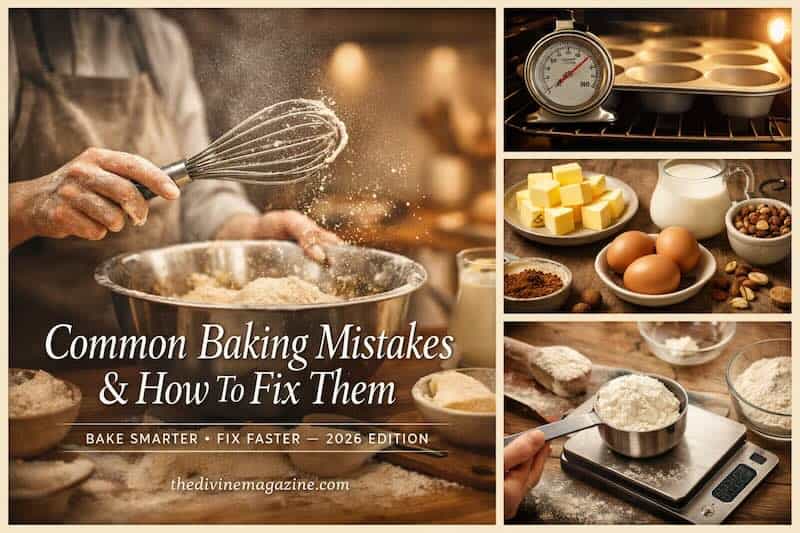
As Julia Childs once said, “The more you know, the more you can create. There’s no end to imagination in the kitchen.” Yet is baking an art or a science? The ability to create tasty—and aesthetically pleasing—baked goods requires a bit of skill, thought, and experience. Sometimes, the experiment of creation fails dismally. How can you know exactly where or when you went wrong?
Never fear. We have put together a general guide to the most common baking mistakes and how to fix them. Easy solutions, quick fixes, and top tips and tricks await.
Uneven Bakes: Using the Wrong Oven Settings
You may have heard before that a faulty technician blames their toolbox instead of their skills. All the while, this assertion holds true in the context of baking. Your oven is your tool, and using it appropriately is the key to creative success. The right temperature settings can make or break a delectable recipe. That being said, all ovens are different and may require varied conditions. How well do you know your way around your oven?
Relying on the given temperature or bake time of a recipe isn’t always the answer. Poor or powerful heat distribution leads to uneven or overdone bakes. Making a small test batch of something simple is a smart tactic to avoid this result. You don’t have to waste precious ingredients—solely try a little trial-and-error to discover the right conditions for your needs.
Taking Shortcuts: Not Fully Reading Recipes
Many home bakers are guilty of taking shortcuts in the kitchen to save time. Surprisingly enough, a lack of preparation is one of the most common baking mistakes leading to soggy or rock-hard end results. Curious how to fix them? Allowing time for setup is the best method available. If your baking time is spontaneous or last-minute, read through the recipe thoroughly to ensure you have the right ingredients on hand—not to mention the correct temperature of ingredients.
Milk, butter, and eggs should usually be at room temperature before mixing them into a smooth batter. Don’t forget about supplementary fixings and recipe toppings. Proper nut and seed storage conditions generally require cold temperatures, so you may want to bring them to room temp first.
More Read

Too Much Creativity: Skipping or Switching Out Ingredients
Baking is an activity that relies on more than its mere ingredients. Regardless of this fact, the ingredients are still the most critical components of the task at hand. Think of your technique similar to a science experiment—using the wrong building blocks is an utter disaster in the making.
Many present-day home bakers like to adjust a recipe to use healthier ingredients. Some bakers may achieve success with this heightened creativity. Yet many create major blunders instead. Be cautious not to skip or switch out key ingredients without knowing their best alternatives. Otherwise, choose a recipe that already calls for the ingredients you would like to use. With your best friends called practice and patience, plenty of baking success awaits.
FAQ: Common Baking Mistakes (2026 Edition)
1. Why do my cakes sink in the middle?
Opening the oven door too early or using expired leavening agents can cause collapse. Check freshness dates and avoid sudden temperature changes. King Arthur Baking offers a detailed guide on proper leavening ratios.
2. How can I fix dry or crumbly bakes?
Reduce baking time slightly and add moisture‑rich ingredients like yogurt, applesauce, or sour cream. Store baked goods in airtight containers to preserve texture. BBC Good Food recommends checking doneness a few minutes early.
3. What’s the best way to measure flour?
Use the spoon‑and‑level method — spoon flour into the cup and level with a knife. Scooping directly compacts flour and adds excess weight, leading to dense results.
4. Can I substitute baking powder for baking soda?
Not directly. Baking soda requires acid to activate, while baking powder contains acid already. Use a 3:1 ratio of baking powder to baking soda when substituting, and adjust liquids accordingly.
5. How do I prevent uneven browning?
Rotate pans halfway through baking and use light‑colored bakeware for even heat reflection. Avoid overcrowding the oven and ensure proper air circulation.
6. What are the top baking trends in 2026?
Precision baking with smart ovens, sustainable ingredients, and AI‑assisted recipe calibration are shaping modern kitchens. Explore Bon Appétit for creative ingredient swaps and eco‑friendly baking ideas.