







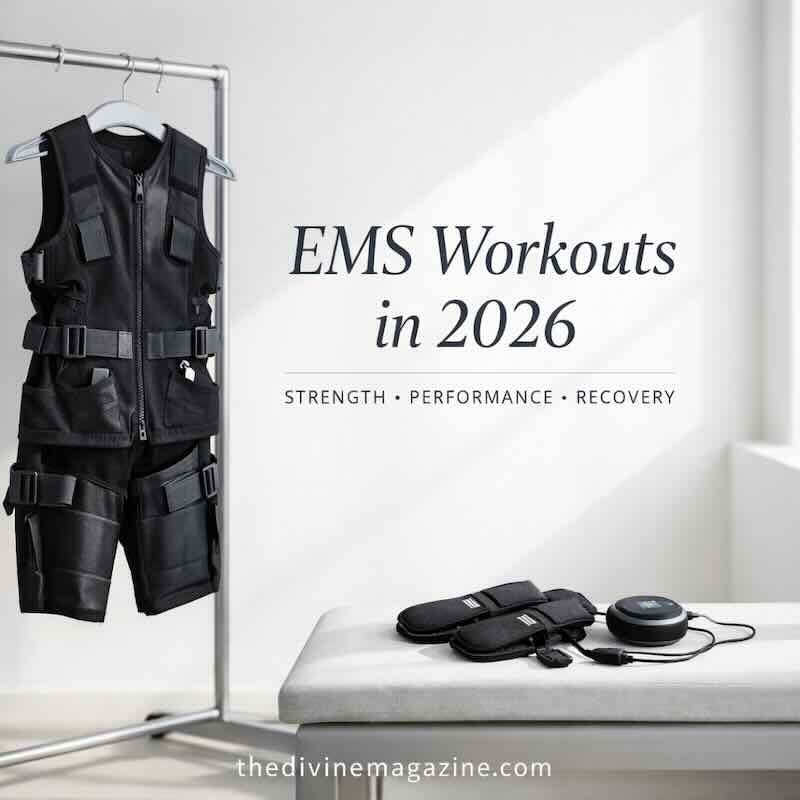
In 2026, fitness technology continues to evolve faster than ever. To see real results from exercise, consistency still matters — but innovation can make it easier. Between your career, family, and social life, finding time for the gym can feel impossible. That’s where EMS comes in. With EMS-enhanced workouts, you can build muscle, lose fat, and boost strength in a fraction of the time. So what exactly is EMS, and why is it reshaping fitness in 2026?
Electric Muscle Stimulation (EMS) is a science-backed method that uses controlled electrical impulses to contract muscles more deeply than traditional exercise. During an EMS session, you wear a specialized bodysuit that delivers gentle electrical pulses, creating resistance and activating muscle fibers that are often missed in standard workouts. The result? Faster, more efficient training with less strain on your joints.
EMS has become a global trend, with studios across Europe and North America integrating it into their programs. According to recent research published by the National Institutes of Health, EMS can significantly improve muscle strength and endurance when combined with proper nutrition and recovery. So how does it actually help you reach your 2026 fitness goals?
EMS works fast
The biggest advantage of EMS-enhanced workouts is efficiency. In just 20 minutes, once or twice a week, you can complete a full-body session that activates over 90% of your muscles simultaneously. Compared to traditional workouts that require multiple 60-minute sessions, EMS saves time while delivering comparable — or better — results.
After your first session, you’ll notice improved posture, heightened body awareness, and a rush of endorphins. Mild muscle stiffness is expected and indicates recovery. Within four weeks, most users report extra muscle definition, better coordination, and increased strength. For deeper insight into EMS recovery, see Healthline’s guide to electrical muscle stimulation.
It improves athletic performance
EMS training is a powerful addition to any athlete’s program. By stimulating hundreds of muscle fibers simultaneously, EMS enhances strength, speed, and endurance. Recovery and nutrition remain key — refueling with protein and electrolytes helps muscles rebuild stronger. Athletes in sports like football, basketball, and swimming use EMS to complement traditional training and reduce injury risk. For a professional perspective, explore Verywell Fit’s overview of EMS benefits.
It helps with weight loss
EMS doesn’t just build muscle — it accelerates fat loss. The stimulation increases your metabolic rate for up to 72 hours post-workout, meaning your body continues burning calories long after you’ve finished. Combined with balanced nutrition and hydration, EMS can be a sustainable way to manage weight. For more on metabolism and calorie burn, see Medical News Today’s metabolism guide.
It helps you reach your full potential
EMS training activates nearly all muscle groups simultaneously — including deeper stabilizing muscles that traditional workouts often miss. This leads to improved intra- and inter-muscular coordination, helping you move more efficiently and powerfully. Studies show that EMS can activate up to 90% of muscle fibers compared to only 30% in standard gym sessions, making it one of the most effective strength-building tools available in 2026.
It helps with muscular imbalance
Targeted EMS sessions can correct muscular imbalances by focusing stimulation on weaker areas. Trainers can adjust electrode placement to help you achieve symmetry, improve posture, and reduce injury risk. This precision makes EMS ideal for rehabilitation and corrective fitness programs. For clinical applications, see Physio-Pedia’s EMS overview.
It’s easy on the joints
EMS workouts are low-impact and joint-friendly. Because resistance comes from electrical impulses rather than weights, there’s minimal strain on knees, hips, and shoulders. This makes EMS suitable for seniors, beginners, and individuals recovering from injuries. For more on joint-safe exercise, visit Arthritis Foundation’s low-impact exercise guide.
It allows easy recovery
EMS enhances blood circulation, reduces lactic acid buildup, and promotes endorphin release — all of which accelerate recovery. Many users report less soreness and faster muscle relaxation after EMS sessions. This makes it easier to maintain consistency without fatigue. For recovery science, explore NIH’s study on electrical stimulation and muscle recovery.
Conclusion
In 2026, EMS stands as one of the most promising innovations in fitness. It’s efficient, joint-friendly, and scientifically validated. Whether you’re an athlete, a busy professional, or someone returning to exercise, EMS can help you achieve results faster and safer. Always consult a certified trainer or physiotherapist before starting EMS to ensure proper technique and safety.
Fitness is evolving — and EMS is proof that technology can help you train smarter, not harder.
FAQ: EMS Workouts in 2026
1. Is EMS safe for everyone?
Yes — when performed under professional supervision. EMS is safe for most healthy adults, but individuals with pacemakers, epilepsy, or cardiovascular conditions should avoid it. Always consult a certified trainer or medical professional before starting. For safety guidelines, see Verywell Fit’s EMS overview.
2. How often should I train with EMS?
Most experts recommend one to two 20‑minute sessions per week. Overtraining can lead to fatigue, so balance EMS with recovery and proper nutrition. For scheduling advice, explore Shape Magazine’s EMS training guide.
3. Can EMS replace traditional workouts?
EMS complements — not replaces — traditional exercise. Combining EMS with cardio, flexibility, and mobility training ensures balanced fitness and long‑term results. Learn more about hybrid training at Men’s Health’s EMS training feature.
4. Does EMS help with recovery after injury?
Yes. EMS is widely used in physiotherapy to restore muscle function and improve circulation after injury. It can reduce pain and accelerate recovery when applied correctly. For clinical insights, see Physio‑Pedia’s EMS resource.
5. What results can I expect in the first month?
Within four weeks, most users notice improved posture, muscle tone, and energy levels. Consistency and nutrition amplify results. For evidence‑based progress timelines, review NIH’s EMS performance study.
6. Is EMS suitable for seniors?
Absolutely. EMS is low‑impact and joint‑friendly, making it ideal for older adults seeking safe strength training. It improves balance and mobility without heavy weights. For age‑specific benefits, see Arthritis Foundation’s low‑impact exercise guide.