







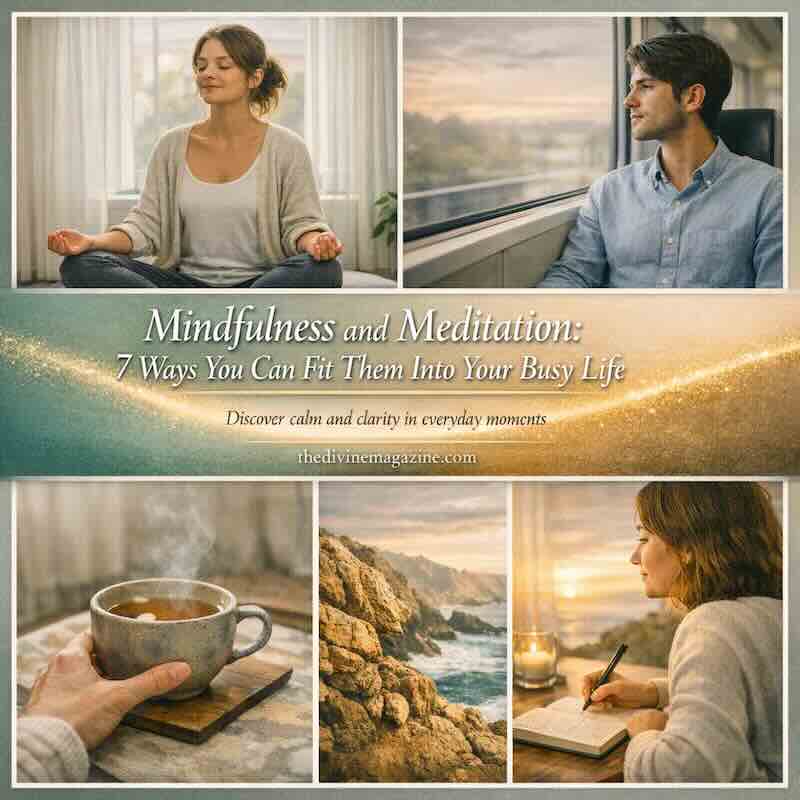
Unless you’ve been living under a rock for the last decade, then you’ve probably heard of mindfulness by now.
Even if you’re not entirely sure what it is, you likely know that it’s related to how we manage stress and anxiety. This is correct, yet despite the fact that the demands of modern life afflict millions of people with these things, not many people consciously practice mindfulness in the course of their everyday lives. But this is starting to change.
What is mindfulness?
Mindfulness is a skill that can be learned and that improves with practice, just like any other. It is the skill of deliberately becoming aware of what is presently happening in and around us. Mindfulness practitioners use a number of exercises to hone their skills, the most well-known of which is meditation. However, there are many others.
The Science Behind the Calm
Modern neuroscience has begun to validate what ancient traditions have known for millennia. Research into neuroplasticity shows that consistent mindfulness can actually change the physical structure of the brain. According to the American Psychological Association, mindfulness can lead to a decrease in the size of the amygdala—the “fight or flight” center responsible for fear and stress—and an increase in the thickness of the prefrontal cortex, which governs decision-making and emotional regulation. This means that by practicing mindfulness, you are literally rewiring your brain to be more resilient.
The benefits of mindfulness
Scientists have isolated several key benefits, ranging from stress reduction to improved working memory. A meta-analysis published by the National Institutes of Health (NIH) suggests that mindfulness-based interventions are as effective as traditional cognitive behavioral therapy for treating anxiety and depression in many individuals.
How to practice mindfulness in everyday life
The benefits above are not only available to those who meditate like monks. They can be yours too if you put in the work. Here are a few ways to fit it into your schedule.
Mindful Commuting
Instead of reaching for your phone the moment you sit on a train or wait at a red light, try “body scanning.” Feel the weight of your body against the seat, the soles of your feet on the floor, and the temperature of the air on your skin. Turning dead time into mindful time is a great way to lower cortisol levels before you even reach the office.
Focus on something you enjoy
It’s a lot easier to be in the present moment when you are only doing one thing. Pick something you like doing, ideally something that involves all the senses. You could pick out a new tea to try from Tea Vision. Spend time focusing on the sensory experience: the warmth of the mug, the steam rising, and the complex notes of the brew. This turns a simple break into a restorative mental exercise.
Breathe deeply
Focus on nice deep breaths. This is such a proven stressbuster that the Navy SEALs use “Box Breathing”—inhaling, holding, exhaling, and holding for four seconds each—to maintain composure in high-stakes environments.
Conclusion: A Journey, Not a Destination
Mindfulness is not about achieving a perfect state of perpetual zen; it is about the gentle act of returning to the “now” every time your mind wanders. Whether you choose five minutes of seated meditation or a mindful minute while sipping your morning tea, the cumulative effect of these small choices is profound. By integrating these micro-practices into your busy life, you move from a state of constant reaction to one of intentional presence, ultimately improving your mental health, your relationships, and your overall quality of life.
Frequently Asked Questions (FAQ)
Q: My mind keeps wandering. Does this mean I’m bad at mindfulness?
A: Not at all! In fact, noticing that your mind has wandered is the practice. The moment you realize you’re thinking about your to-do list, you have successfully practiced mindfulness. Simply acknowledge the thought and gently bring your attention back to your breath or your activity.
Q: How long does it take to see the benefits?
A: While many people feel an immediate sense of relief after a deep breathing exercise, long-term neurological changes typically appear after about 8 weeks of consistent, daily practice. Consistency is more important than the length of each session.
Q: Is mindfulness a religious practice?
A: While mindfulness has roots in Buddhist traditions, the modern practice used in clinical settings is entirely secular. It is a psychological exercise in attention and awareness that can be practiced by anyone, regardless of their spiritual or religious beliefs.
Q: Can kids practice mindfulness too?
A: Yes! Mindfulness is highly beneficial for children, helping with emotional regulation and focus in school. For kids, it is often taught through simple games, like focusing on the sounds they can hear in the room or “belly breathing” with a stuffed animal on their stomach.