







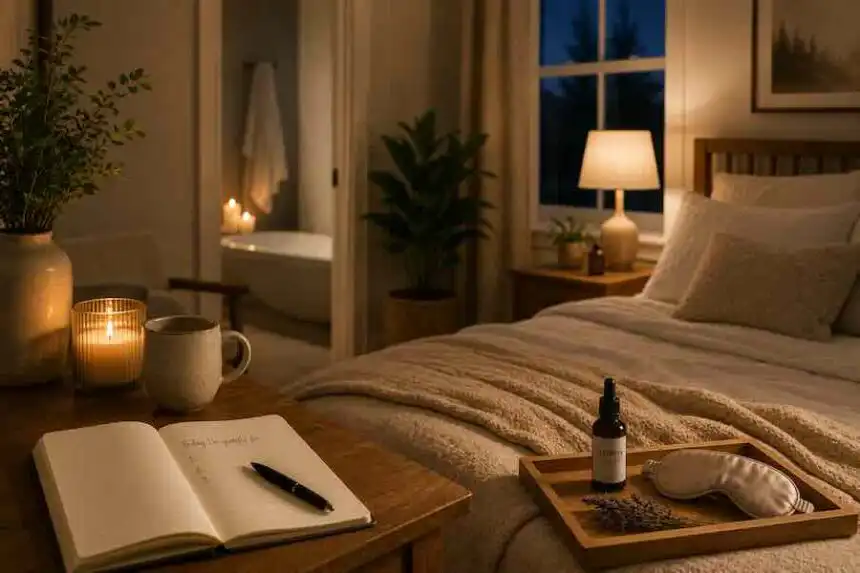

Good sleep rarely begins at the exact moment your head reaches the pillow. It starts earlier: with the light you see in the morning, the coffee you drink in the afternoon, the movement your body gets during the day, and the atmosphere you create as evening arrives.
- Let Morning Light Do Some of the Work
- Move During the Day, Not as Punishment at Night
- Give Caffeine a Curfew That Works for You
- Create a Softer Landing Between Day and Night
- Turn a Warm Bath Into a Nightly Signal
- Treat Naps as a Tool, Not a Second Night
- Make the Bedroom Feel Like Night
- The Practical Takeaway: Build a Routine You Can Repeat
- Conclusion
- FAQ
That makes a better night less about chasing one perfect sleep hack and more about giving your body consistent signals. The original guide focuses on seven habits: warm bathing, exercise, stress management, daytime light, reduced evening screen exposure, caffeine timing, and sensible naps. :contentReference[oaicite:0]{index=0} Together, they can form a realistic routine rather than another demanding wellness checklist.
Let Morning Light Do Some of the Work
One of the most useful things you can do for tonight’s sleep happens shortly after waking.
Your circadian rhythm responds to light and darkness, helping coordinate when you feel awake and when sleepiness begins to arrive. The original guide recommends getting natural or bright light during the day and spending time outdoors in the morning. :contentReference[oaicite:1]{index=1} The Sleep Foundation’s guide to circadian rhythm offers further background on how this internal timing system works.
In practice, this can be beautifully uncomplicated. Open the curtains. Drink your first coffee near a bright window. Step outside for a walk before work. On dark winter mornings, speak with a healthcare professional if you are considering light therapy for a specific sleep or mood concern.
Move During the Day, Not as Punishment at Night
Exercise does not need to leave you exhausted to belong in a sleep-friendly routine. Walking, cycling, strength work, swimming and yoga can all introduce movement into an otherwise sedentary day.
The source article identifies regular physical activity as one of its core sleep habits and points readers toward the CDC’s physical activity guidance. :contentReference[oaicite:2]{index=2} If vigorous late-night training leaves you feeling alert rather than sleepy, experiment with moving harder sessions earlier and reserve gentler movement for the evening.
Give Caffeine a Curfew That Works for You
The afternoon coffee can feel harmless because bedtime is still hours away. Caffeine, however, does not disappear the moment its noticeable buzz fades.
The original article recommends limiting caffeine later in the day and suggests replacing late coffee with decaffeinated drinks or herbal tea. :contentReference[oaicite:3]{index=3} Rather than treating one universal cutoff time as a rule for everyone, pay attention to your bedtime, caffeine intake and individual sensitivity. The Sleep Foundation’s caffeine and sleep guide provides a useful starting point.
Create a Softer Landing Between Day and Night
Evenings often arrive without a transition. One minute there are emails, messages and bright screens; the next, we expect the brain to become quiet because the bedroom light has gone out.
Build some distance between those two states. Lower the lights. Put unfinished tasks somewhere you can return to tomorrow. Read, stretch, journal, listen to quiet music or spend a few minutes doing slow breathing exercises. The source material similarly recommends mindfulness, journaling and breathing as ways of reducing nighttime stress. :contentReference[oaicite:4]{index=4}
This is also a natural point to reduce stimulating screen use. The original guide discusses evening blue-light exposure and suggests replacing some screen time with reading or meditation. :contentReference[oaicite:5]{index=5} You do not need to turn your home into a technology-free retreat. A consistent period of quieter, dimmer activity before bed may be much easier to sustain.
Turn a Warm Bath Into a Nightly Signal
Warm water changes the texture of an evening. Shoulders loosen. The room becomes quieter. For twenty minutes, there is very little to scroll, answer or finish.
The original article recommends a warm bath or soak as part of a bedtime routine and references the Sleep Foundation’s discussion of bathing before bed. :contentReference[oaicite:6]{index=6} For those who prefer a hot tub, it also references the AquaRest 300 Select Premium.
The ritual matters as much as the luxury of it. A shower can serve a similar purpose when a bath is impractical: warm water, softer lighting, clean sleepwear and a bedroom waiting at a comfortable temperature.
Treat Naps as a Tool, Not a Second Night
There are afternoons when closing your eyes for a while feels irresistible. A short nap can fit comfortably into the day, but a long late-afternoon sleep may leave some people staring at the ceiling hours later.
The source article recommends keeping naps brief and consistent, citing guidance from the Mayo Clinic. :contentReference[oaicite:7]{index=7} If nighttime sleep has become difficult, consider whether the timing or duration of daytime naps could be contributing.
Make the Bedroom Feel Like Night
A good bedroom does not need to resemble a wellness resort. It needs to remove friction.
Keep unnecessary light low, reduce disruptive noise where possible and choose bedding that feels comfortable for the season. The original guide recommends a cool, dark and quiet bedroom and points to the Sleep Foundation’s bedroom environment guidance. :contentReference[oaicite:8]{index=8}
There is something reassuring about entering a room that already feels ready for sleep: curtains drawn, surfaces relatively clear, sheets cool, phone no longer glowing beside your face. The environment quietly tells the body what comes next.
The Practical Takeaway: Build a Routine You Can Repeat
You do not need to adopt seven new habits tonight. Start with two that fit naturally into your life.
Perhaps that means morning daylight and an earlier final coffee. Later, add a quieter half-hour before bed. If baths help you unwind, make one part of a few evenings each week. If naps are interfering with nighttime rest, adjust them.
The strongest routine is rarely the most elaborate one. It is the one that still feels manageable on an ordinary Wednesday when work ran late, dinner took longer than expected and motivation is nowhere to be found.
Conclusion
Better sleep is built across the day. Light in the morning, movement in the afternoon and quieter choices at night gradually create a rhythm the body can recognize.
If poor sleep is persistent, severe or affecting daily life, lifestyle changes should not replace medical advice. Speak with a qualified healthcare professional about ongoing insomnia, significant daytime sleepiness or other concerning symptoms.
FAQ
How much sleep do adults generally need?
The source article gives a general range of seven to nine hours per night for adults while emphasizing consistency and sleep quality. :contentReference[oaicite:9]{index=9} Individual needs can vary with age, health and circumstances.
Should I stop using my phone completely before bed?
Not necessarily. The more practical goal is reducing stimulating screen use and bright light as bedtime approaches. If scrolling keeps you awake, experiment with placing the phone farther from the bed and replacing the final part of your evening with something quieter.
Are daytime naps bad for sleep?
Not automatically. The original guide distinguishes short naps from longer or irregular daytime sleeping that may interfere with nighttime rest. :contentReference[oaicite:10]{index=10} Timing and duration matter, as does your individual response.
Can exercise help me sleep better?
Regular physical activity is included among the source article’s key habits for supporting sleep. :contentReference[oaicite:11]{index=11} If vigorous exercise close to bedtime makes you feel unusually alert, try scheduling demanding sessions earlier.
What should I do if better sleep habits are not working?
Persistent sleep problems can have many causes. If difficulty falling asleep, staying asleep or excessive daytime tiredness continues despite reasonable routine changes, discuss it with a healthcare professional rather than continually adding new sleep hacks.