







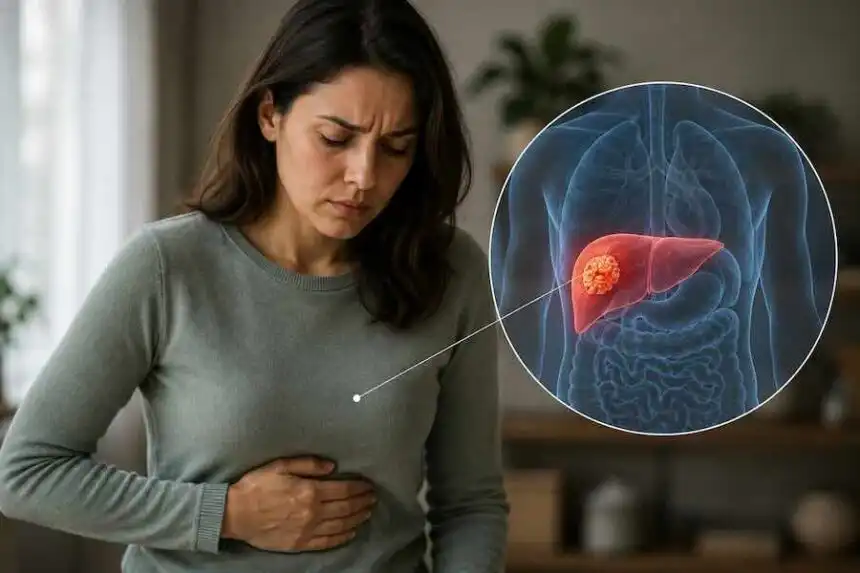
Liver cancer can be difficult to detect early because symptoms often do not appear until the disease has progressed. When signs do emerge, they can resemble far more common problems: reduced appetite, fatigue, abdominal discomfort, nausea, or unexplained weight loss. The important distinction is persistence. New or unexplained changes deserve medical attention, particularly for people already living with chronic liver disease.
- Why Liver Cancer Can Be Difficult to Detect Early
- Possible Signs and Symptoms of Liver Cancer
- Jaundice, Dark Urine and Pale Stools
- Who Has a Higher Risk of Liver Cancer?
- Screening and Surveillance for Higher-Risk People
- How Doctors Investigate Possible Liver Cancer
- When Should You Contact a Doctor?
- Symptoms Are Signals, Not a Diagnosis
- Conclusion: Know Your Risk and Notice Persistent Changes
- FAQ: Early Signs of Liver Cancer
This guide explains the possible signs of liver cancer, the risk factors that matter, and when medical evaluation is appropriate. Symptoms alone cannot diagnose liver cancer, and having one or several of these signs does not mean you have cancer.
Why Liver Cancer Can Be Difficult to Detect Early
The liver has considerable functional capacity, and early liver cancer may cause few noticeable changes. Small tumors can also be difficult to detect during a physical examination. That helps explain why early cancer symptoms can be easy to overlook.
The American Cancer Society notes that signs and symptoms of liver cancer often do not appear until later stages, although they can occasionally develop sooner. There is also no widely recommended liver cancer screening program for people at average risk. People at higher risk are a different matter and may require regular surveillance.
That distinction matters. Waiting for symptoms is not the same as surveillance. If you have cirrhosis, chronic hepatitis B, or another condition associated with a substantially increased risk of hepatocellular carcinoma, your clinician may recommend monitoring even when you feel completely well.
Possible Signs and Symptoms of Liver Cancer
There is no single early symptom that reliably identifies liver cancer. Instead, clinicians consider the combination of symptoms, medical history, examination findings, laboratory results, and imaging.
- Unexplained weight loss: Losing weight without intentionally changing your diet or activity deserves investigation, particularly when the change continues.
- Loss of appetite or feeling full quickly: A noticeable reduction in appetite or becoming unusually full after a small meal can occur.
- Abdominal discomfort: Pain or discomfort may develop in the abdomen or around the right shoulder blade.
- Abdominal swelling: Fluid accumulation can cause the abdomen to become enlarged or uncomfortable.
- Jaundice: Yellowing of the skin or whites of the eyes requires medical assessment and can have many causes besides cancer.
- Nausea or vomiting: Persistent digestive symptoms can occur but are highly nonspecific.
- Itching: Persistent itching can accompany liver and biliary problems.
- Unusual bruising or bleeding: Changes in liver function can sometimes affect normal blood clotting.
Some people with chronic hepatitis or cirrhosis may simply notice that they feel worse than usual, while others may first show changes in laboratory results. None of these findings is specific enough to establish a diagnosis on its own.
Jaundice, Dark Urine and Pale Stools
Changes involving bilirubin and bile flow can produce particularly visible signs. Jaundice causes the skin and whites of the eyes to become yellow. Dark urine or unusually pale stools can also accompany liver or bile-duct problems.
These changes should not be treated as proof of cancer. Gallstones, hepatitis, medication-related liver injury, and other conditions can produce similar symptoms. New jaundice should be medically assessed rather than self-diagnosed.
Who Has a Higher Risk of Liver Cancer?
Risk changes the clinical picture. Chronic hepatitis B and C infections and cirrhosis are important risk factors for hepatocellular carcinoma, the most common primary liver cancer. Heavy alcohol use, excess body weight, type 2 diabetes, tobacco use, and certain inherited or metabolic diseases can also increase risk.
Fatty liver disease requires some nuance. Having fatty liver does not automatically mean that someone should undergo routine liver cancer surveillance. Risk becomes substantially more important when advanced fibrosis or cirrhosis is present. That is one reason individual assessment is preferable to assuming that every person with concerns about liver health needs the same tests.
Screening and Surveillance for Higher-Risk People
For appropriate higher-risk patients, surveillance can identify suspicious changes before symptoms develop. Current liver-disease guidance supports hepatocellular carcinoma surveillance approximately every six months for people with cirrhosis and certain populations with chronic hepatitis B.
Ultrasound and the blood biomarker alpha-fetoprotein, commonly abbreviated AFP, are frequently used. AFP has limitations: some people with early liver cancer have normal AFP levels, while elevated levels can occur for reasons other than cancer. It therefore should not be interpreted as a stand-alone cancer test.
If surveillance ultrasound identifies an abnormality, further evaluation may involve contrast-enhanced CT or MRI. The precise pathway depends on the finding and the patient’s underlying liver condition.
How Doctors Investigate Possible Liver Cancer
If symptoms, examination findings, or surveillance results raise concern, evaluation generally begins with medical history and a physical examination. A clinician may ask about hepatitis, alcohol use, medications, previous liver disease, family history, and changes in appetite, weight, or abdominal symptoms.
Blood tests can provide information about liver function and other abnormalities, while imaging allows clinicians to examine the liver itself. Ultrasound, CT, and MRI can all play roles depending on the clinical situation. In some cases, a biopsy may also be considered.
The important point is that symptoms cannot distinguish liver cancer reliably from other liver, gallbladder, gastrointestinal, or metabolic conditions. Diagnosis requires professional assessment.
When Should You Contact a Doctor?
Arrange medical evaluation for persistent or unexplained symptoms such as unintended weight loss, continuing loss of appetite, abdominal discomfort or swelling, or a significant unexplained change in how you feel. Jaundice should also be assessed promptly.
If you already have cirrhosis, chronic viral hepatitis, or another significant liver condition, contact your healthcare team about new symptoms rather than waiting for your next routine appointment. Just as importantly, continue your prescribed surveillance schedule even when you feel healthy.
Symptoms Are Signals, Not a Diagnosis
Reading a symptom list can make ordinary physical changes feel frightening. Most symptoms associated with liver cancer can also occur with conditions that are not cancer. Their value lies in prompting appropriate investigation, not in enabling diagnosis at home.
Pay attention to what is new, persistent, or unexplained. Keep track of when symptoms began and whether they are changing. If you have known liver disease, make sure your clinician knows about it. Preventive habits that support general health remain worthwhile, too, but they do not replace medical surveillance when surveillance is indicated.
Conclusion: Know Your Risk and Notice Persistent Changes
Liver cancer can develop without obvious early symptoms, which makes risk-based surveillance particularly important. Unexplained weight loss, appetite loss, abdominal discomfort or swelling, jaundice, nausea, and other changes can warrant medical investigation, but none confirms cancer by itself.
If you have cirrhosis, chronic hepatitis B, or another established risk factor, discuss your individual surveillance plan with your healthcare team. If you do not have known liver disease but develop persistent or concerning symptoms, medical evaluation is still the appropriate next step.
FAQ: Early Signs of Liver Cancer
Can liver cancer have no symptoms?
Yes. Liver cancer may cause no noticeable symptoms in its early stages. This is one reason surveillance is recommended for certain people at increased risk rather than relying on symptoms alone.
What are possible early signs of liver cancer?
Possible signs include unexplained weight loss, reduced appetite, feeling full after eating a small amount, nausea, and abdominal discomfort. These symptoms are nonspecific and are frequently caused by conditions other than cancer.
Does jaundice mean liver cancer?
No. Liver cancer is one possible cause of jaundice, but there are many others. New yellowing of the skin or eyes should be medically evaluated so the underlying cause can be identified.
Who should be screened for liver cancer?
There is no widely recommended routine screening program for average-risk adults. Surveillance is recommended for many people with cirrhosis and certain higher-risk populations with chronic hepatitis B. Eligibility depends on individual risk and should be discussed with a clinician.
How often are high-risk people monitored?
For many people who meet criteria for hepatocellular carcinoma surveillance, current guidance recommends monitoring approximately every six months, commonly with liver ultrasound and AFP testing. The exact approach can vary according to individual circumstances.
Can a blood test diagnose liver cancer?
No single blood test can reliably diagnose liver cancer. AFP can contribute useful information in appropriate patients, but normal AFP does not rule out cancer and an elevated result does not automatically mean cancer is present. Imaging and, in selected cases, additional diagnostic procedures are required.